Choosing Open Baskets or Lidded Boxes for Daily Storage
Choose open baskets or lidded boxes for daily storage by weighing access, visibility and protection, so everyday belongings stay easy to use and put away.
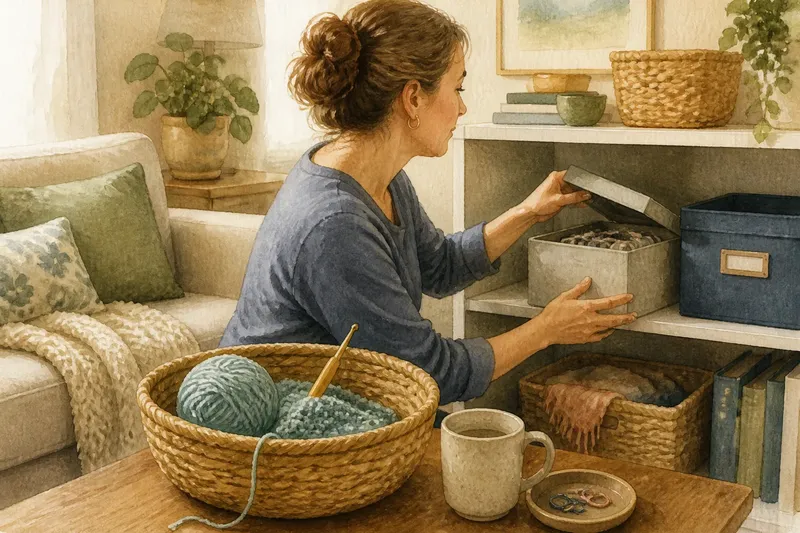
You reach for the mending basket beside the sofa and find the thread, buttons and needle case exactly where you left them. For open baskets or lidded boxes for daily storage, that small moment points to the real choice: whether seeing and reaching the contents matters more than keeping them covered and contained.
Start with the belongings and the task, not the look of the container. An open basket can make a routine easy to begin, while a lid can reduce visual clutter and help keep a group together. Different shelves may call for different answers.
Start with the task the storage should support
Choose one small storage problem, such as a side table, craft shelf or bathroom cupboard. Take the items out and group together what belongs to the same activity; a pile of unrelated belongings makes it harder to judge what kind of container would help.
Consider how often you reach for the group and what happens after you use it. Reading glasses and a bookmark may need to be close at hand, while spare craft pieces may be used occasionally and benefit from staying together. Include the return journey: an easy place to put things away can matter as much as quick access.
A quick fit check can rule out an otherwise appealing choice. If a box lid cannot open beneath a shelf, or a basket catches on neighbouring objects in a cupboard, try another shape or position before settling on either type.
Use an open basket when visibility and access matter
An open basket suits familiar items used often, provided they tolerate ordinary exposure to household dust. A current book, a small knitting project or cloths for wiping a kitchen surface are possible candidates. With no lid to lift or set aside, the contents are ready when the task begins.
Visibility helps only when the contents remain easy to distinguish. A shallow basket with a few related items can make its purpose obvious; a deep basket filled with odds and ends can hide what you need almost as thoroughly as a box. Keep the contents tied to one activity rather than treating the basket as a general drop-off point.
Material affects both appearance and upkeep. Woven willow or seagrass adds texture, while smooth plastic or metal is simpler to wipe. Check the inside and edges: delicate fabric may snag on rough fibres, and a washable liner may help with belongings that shed crumbs or lint.
Open storage can make an ongoing activity feel inviting, but several baskets of unrelated contents may leave a shelf looking unsettled. Use one where seeing the items helps you act, not just because the basket looks attractive on its own.
Choose a lidded box when contents need covering or containment
A lidded box can suit belongings used occasionally, small pieces that are easy to scatter, or items that benefit from less exposure to dust. Spare craft supplies, seasonal accessories and cables kept in reserve are possible candidates. A lid also hides colours and shapes that do not need to be on display.
Covering items does not help if you can no longer identify or reach them. Give a box one clear purpose, keep it somewhere accessible and use a short label if its contents are not obvious. If lifting the lid and finding a place for it feels awkward in that spot, consider another position or an open container.
Match the box material to what it holds. Cardboard may suit a dry cupboard, while rigid plastic is easier to wipe clean. For textiles or belongings with particular care needs, do not assume a closed box is appropriate: check the care information and avoid storage that could trap unwanted moisture.
It is not worth buying matching boxes for every shelf if their lids are awkward or their contents are reached constantly. Nor is there much point in transferring sturdy, already-organised belongings merely to make a cupboard look uniform. A container should solve a real problem with access, protection or appearance.
Match the container to how often you use the contents
Use everyday language rather than rigid categories: often, regularly or only now and then. The useful question is whether the extra action of opening a lid will irritate you in the container’s actual position.
- Observation: you reach for the items repeatedly, and they are easy to recognise and tolerate exposure. If both are true, choose an open basket; if they gather dust or look distracting, use a covered container in an accessible place.
- Observation: the items belong to one regular activity, with small pieces that may scatter. If keeping them together matters most, choose a lidded box; if seeing the group helps you start, use an open basket with a small inner pouch.
- Observation: you use the group only now and then, and its contents are easy to identify. If so, choose a lidded box; if a lid would be hard to open where it sits, move it or use a simple open container.
- Observation: the belongings are dust-sensitive or have specific care needs. If a suitable covered container fits their care guidance, use it; if not, choose a different material or storage position rather than assuming any lid will help.
- Observation: the contents are useful often but make the shelf look busy. If a box remains convenient to open, use one; if not, try a plain-sided basket or a less prominent location.
- Observation: there is little room to lift a lid or remove a basket without disturbing nearby objects. If either form blocks the routine, try a different position or shape; if space remains tight, store only the most useful items there.
These checks are decisions, not rules. The same household may use a basket for cloths beside the sink and a box for spare cables in a cupboard because the tasks and conditions differ.
Try the container in its actual place
Before buying anything, use a spare tray to judge whether an open grouping is convenient, or a clean shoebox to see whether a lid suits the shelf. Treat the trial as temporary: a shoebox may help you assess access, but it is not automatically the right long-term home for every item.
Imagine you keep a crochet project beside the sofa. The starting group is a ball of yarn, a hook and an unfinished piece; you place all three in an open basket and return them there after each session. If the yarn stays with the work and remains easy to reach, the basket supports the routine. If it gathers dust or gets disturbed, move the group to a lidded box and check that opening it is still convenient from the sofa.
Try the full movement once: reach for an item, use it, then put it back. Notice whether you have to shift other objects, search through a pile or find somewhere to place a lid. If the routine feels clumsy, adjust the container’s size or position before deciding the belongings themselves are hard to keep tidy.
Keep the trial limited to the group you are considering. Adding unrelated belongings to a temporary basket obscures whether it suits the task; once you have a workable arrangement, transfer only that group and leave the rest of the shelf alone.
Which storage questions help settle the choice?
Are open baskets better for items used every day?
They often suit everyday belongings because the contents stay visible and accessible without opening a lid. They are less suitable if exposed items gather dust, become untidy or make the surrounding shelf feel distracting.
Do lidded boxes keep household belongings dust-free?
A lid can reduce exposure to dust, though the protection depends on the container’s fit and material. For belongings with particular care needs, follow the relevant care information rather than assuming any closed box is suitable.
What should I keep in an open basket?
Consider a small, recognisable group used often, such as a current book, reusable cloths or tools for an active hobby. Keep the basket focused so you can see what belongs there and return it easily.
How can I make a lidded box easier to identify?
Give the box one clear purpose and keep it in a consistent place. A short label or an obvious visual cue can identify the contents without turning storage into a complicated filing system.
Check the arrangement as the routine unfolds
Keep the chosen container in place through the activity it is meant to support. If a basket repeatedly overflows, remove unrelated items or give the group a more suitable home; if a box stays shut because opening it feels like a chore, move it closer or make the belongings visible.
For open baskets or lidded boxes for daily storage, choose the form that fits both the belongings and the person who puts them away. Keep frequently handled items simple to reach, cover what benefits from protection or visual quiet, and let each shelf have the arrangement that makes its task easier.